
Interview: AI for real-time passenger insights
iris CTO Paul Haufe in conversation with ViSenSys CEO Dr. André Ibisch
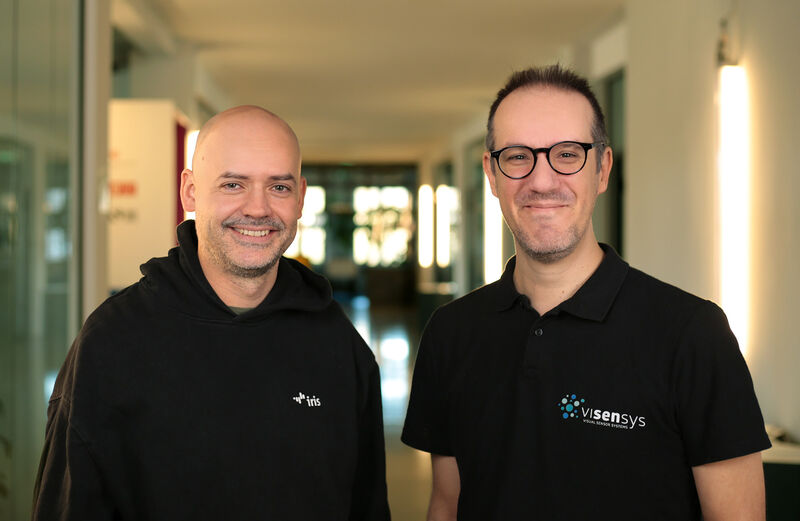
AI video analysis is opening new possibilities for public transport, from real-time occupancy insights to precise object detection. ViSenSys brings camera-based analysis directly into the vehicle, with a strong focus on data protection and reliable, real-time results. In this interview, Paul Haufe (CTO, iris-GmbH infrared & intelligent sensors) speaks with Dr. André Ibisch (CEO, ViSenSys GmbH) about how the technology evolved, why it matters, and how both companies are shaping the future of smart mobility.
André, you founded the company in 2017 as a spin-off from TU Dortmund and got involved with AI very early on. Before we go into more detail, could you briefly introduce ViSenSys, its vision, and what makes it special?
Sure. I became interested in AI early on during my computer science studies, especially in areas like robot soccer and computer vision. I then completed my doctorate in digital image processing at the University of Bochum, working on autonomous driving and group emotion detection. Because I enjoyed AI and computer vision so much, I founded a spin-off focused on Intelligent Observers. And we have been developing this concept for the last seven years.
You mentioned the principle of the Intelligent Observer. Can you briefly explain what exactly it is? A product? A philosophy? A technology?
The Intelligent Observer is our umbrella term for all our products. In public transport, this mainly involves analysis performed directly in the vehicle. No image or video data leave the vehicle. We only forward metadata to customers, avoiding any data protection concerns.
Speaking of data protection: in cases where video data does need to be transferred to the backend, are there solutions that ensure full compliance with data protection regulations?
Yes. Over the past few years, we’ve developed solutions for pseudonymization and anonymization. We can either pixelate individuals directly in the video to allow safe viewing, or fully anonymize them afterward.
Please tell us how it all started.
At first, we didn’t have a clear focus and explored several areas, such as logistics, production, and quality assurance. Over time, we saw growing interest and a clear need in public transport - particularly for automatic passenger counting with cameras, seat occupancy, capacity utilization, and additional functions that create value for transport operators.
Looking five years ahead - what will be relevant?
We started with occupancy detection, and we want to provide this data in real time for passengers as well as bicycles, strollers, and wheelchairs. This allows people to plan their journeys and choose compartments with enough available space. Long-term, we see enormous potential in detecting dangerous situations: vandalism, emergencies, or violence against passengers and staff. That’s definitely where things are heading.
From a technology perspective, and starting from machine learning and AI, can the technology be expanded to detect other items, like luggage at airports or skis on shuttle trains?
Absolutely. We’ve already carried out projects with Rhätische Bahn detecting skis and mountain bikes. The technology can easily be adapted to other objects such as e-scooters or luggage.
iris and DILAX have been counting passengers for a very long time using traditional sensor technologies - 2D, 3D, mainly at doors - with very high accuracy. Nevertheless, you entered the market with a new technology. Why do you think that worked?
Public transport operators must install cameras for safety reasons. Our idea was to use these existing cameras for additional functionalities. This complements traditional passenger counting technologies very well. You don’t need sensors in every vehicle. Combining APC sensors with camera-based systems and our algorithms provides excellent coverage.
Let’s talk about overlap. Where do you see similarities between our technologies, especially regarding machine learning and sensor development?
The applications are the same: automatic passenger counting and occupancy detection. Both companies complement each other very well, technologically and in terms of customer base. You bring deep experience, expertise, and a large international network, which we as a young company have only been able to build step by step. It’s a win-win for both sides.
Could you briefly explain how ViSenSys is structured? You are a tech start-up, so who does what?
We’re mainly developers. We have one employee handling administration, and I mostly took care of sales because I enjoy discussing the technology with customers. But at our core, we’re developers through and through.
Thank you for the interview and the valuable insights into how iris and ViSenSys are working together to shape intelligent, data-driven public transportation.
Свяжитесь с нами
Мы работаем для Вас
Общие запросы
По общим вопросам, пожалуйста, звоните нам
Мы работаем с понедельника по пятницу, с 10:00 до 18:00 (МСК)